

Published: 03/12/2026
By Catherine Wu, Global Health Communications Assistant
On World Tuberculosis (TB) Day, March 24, we recognize global efforts to eliminate the disease, which affects more than 10 million people and kills over 1 million people per year.
At Stanford, researchers across the fields of microbiology, immunology, infectious diseases, geographic medicine, and beyond, are driving advancements in TB research and patient care.
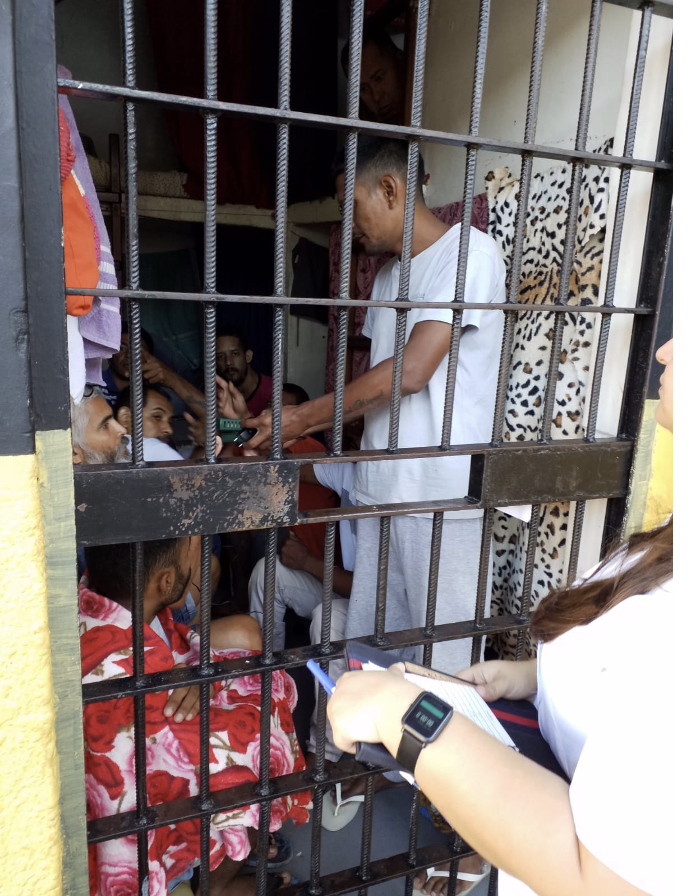
Dr. Jason Andrews, a Global Health Faculty Fellow and Professor of Medicine, leads a lab focused on reducing disparities in TB treatment and enhancing patient outcomes in resource-limited settings. This includes prisons, where rates of TB tend to be much higher than in nearby communities.
“TB has been with us for millennia, yet we are still uncovering fundamental truths about how it spreads and how to more effectively diagnose and prevent it. We must leverage these insights to intensify our efforts and accelerate progress against the world’s leading infectious killer,” Andrews said.
TB has been with us for millennia, yet we are still uncovering fundamental truths about how it spreads and how to more effectively diagnose and prevent it. We must leverage these insights to intensify our efforts and accelerate progress against the world’s leading infectious killer.
Jason Andrews, Professor in the Division of Infectious Diseases and Geographic Medicine
In two recent publications, members of his lab examined methods to predict TB risk before the disease manifests, which could reshape current screening strategies.
One study, a forthcoming publication currently available online as a pre-print, used genomic data to investigate how transmission occurs among individuals who present with and without symptoms during the time of their diagnosis. Identifying over 2,000 TB patients in Brazil, more than half of whom were incarcerated, researchers found that asymptomatic TB may contribute to transmission at levels comparable to symptomatic disease. Because the established strategies for TB control largely rely on symptom-based screening, these findings reveal the significance of identifying those asymptomatic patients who may be transmitting the disease before developing noticeable symptoms.

“These results highlight the potential value of systematic screening strategies, where earlier detection could help interrupt transmission and improve TB control,” said Kesia Esther da Silva, the study’s first author and a basic life research scientist in the Andrews lab.
These results highlight the potential value of systematic screening strategies, where earlier detection could help interrupt transmission and improve TB control.
Kesia Esther da Silva, basic life research scientist
In February 2026, Andrews and his colleagues published a study in The Journal of Infectious Diseases exploring the relationship between displaying TB-associated symptoms and risk of actually having the disease. Also focusing on incarcerated people in Brazil, researchers found that those with new, TB-related symptoms were at significantly higher risk for having TB compared with patients who were experiencing persistent symptoms or were asymptomatic. These results demonstrate that monitoring how TB symptoms evolve over time may offer more meaningful screening outcomes than the point-in-time symptom screenings which are currently the standard in TB care. These point-in-time screenings can miss a considerable fraction of TB cases.
According to the study’s first author and Research Program Coordinator Esther Jung: “All individuals in high-risk settings should be screened for TB, but we should give particular attention to those with evolving symptoms and X-ray changes.”
All individuals in high-risk settings should be screened for TB, but we should give particular attention to those with evolving symptoms and X-ray changes.
Esther Jung, Research Program Coordinator
As Andrews and his colleagues continue to investigate TB, their findings may help shape further public health strategies in Brazil and around the world.
Anyone interested in collaborating can contact Andrews at jandr@stanford.edu.